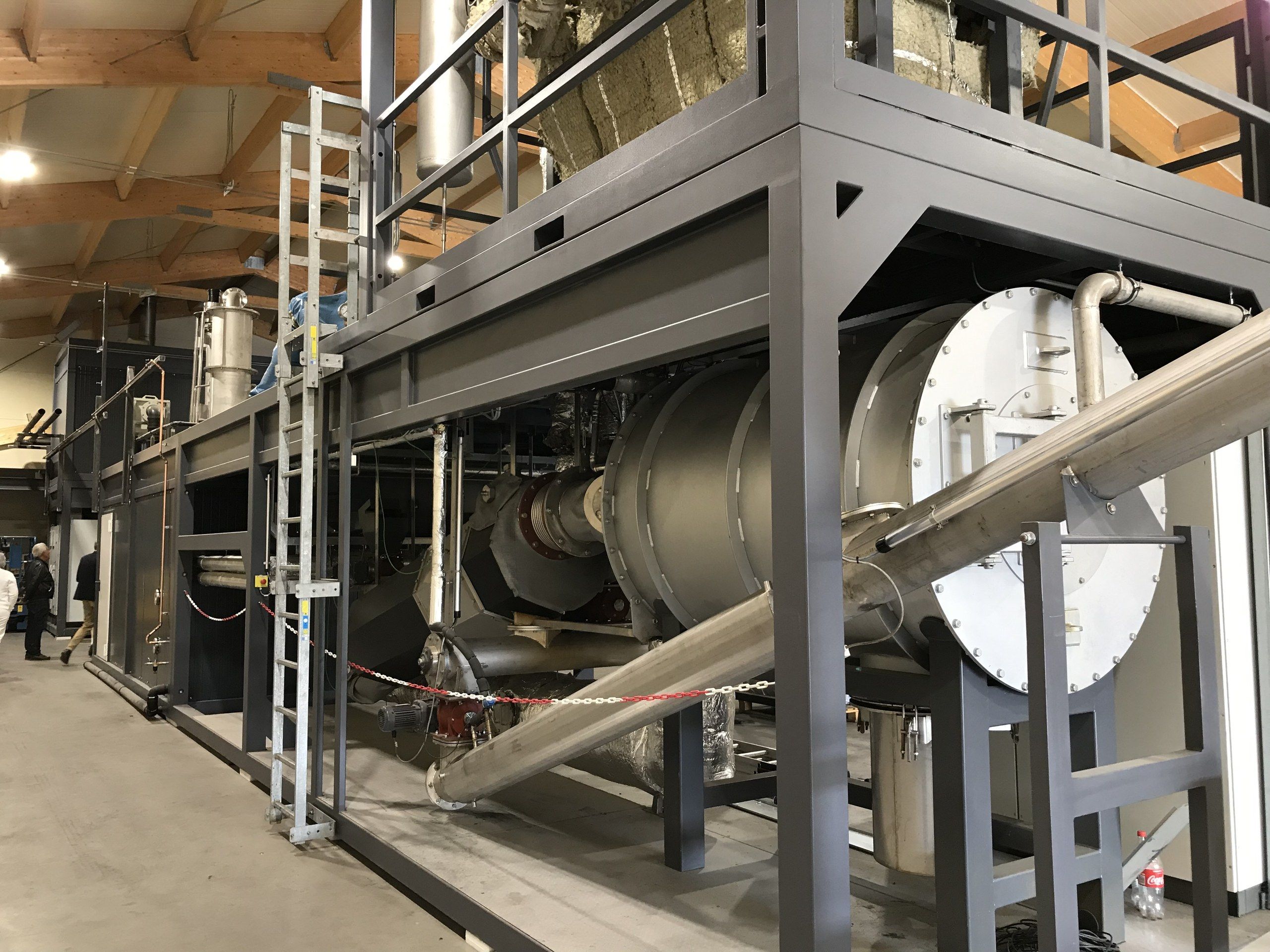
Biochar carbon removal
How the carbon gets from the air into the ground
The ECOERA Millennium system combines what plants do best with what pyrolysis does best. Photosynthesis captures the carbon. We make it stay.
01 / Process
Four steps, one direction
Biochar holds the removed carbon as a solid, so there is no gas to compress, transport or inject.
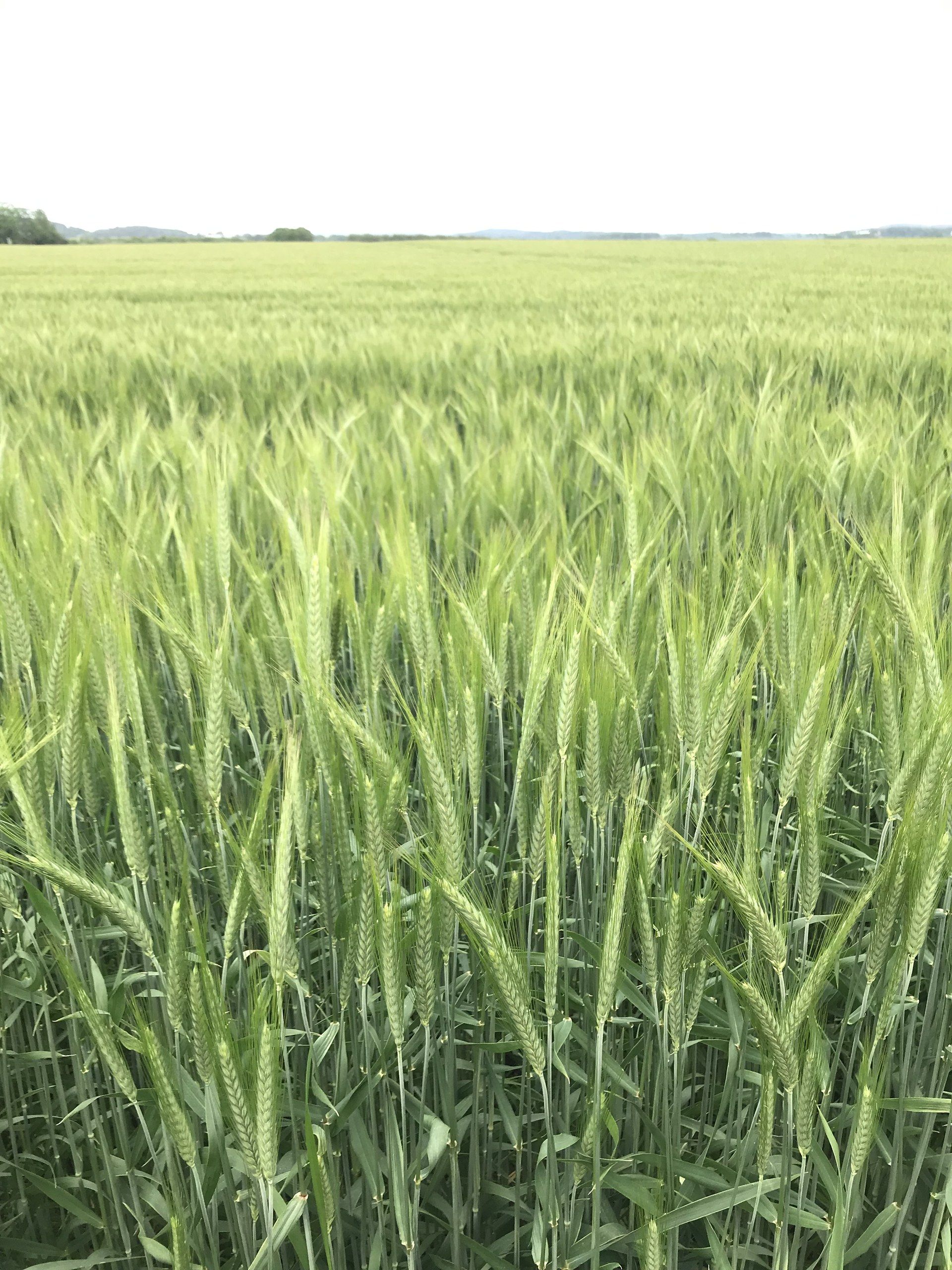
Crops capture the carbon
Every growing season, crops pull carbon dioxide out of the air and build it into stems, husks and seed. Sunlight does the work; no machine comes close at this scale.
- In
- CO₂ + sunlight
- Out
- Biomass
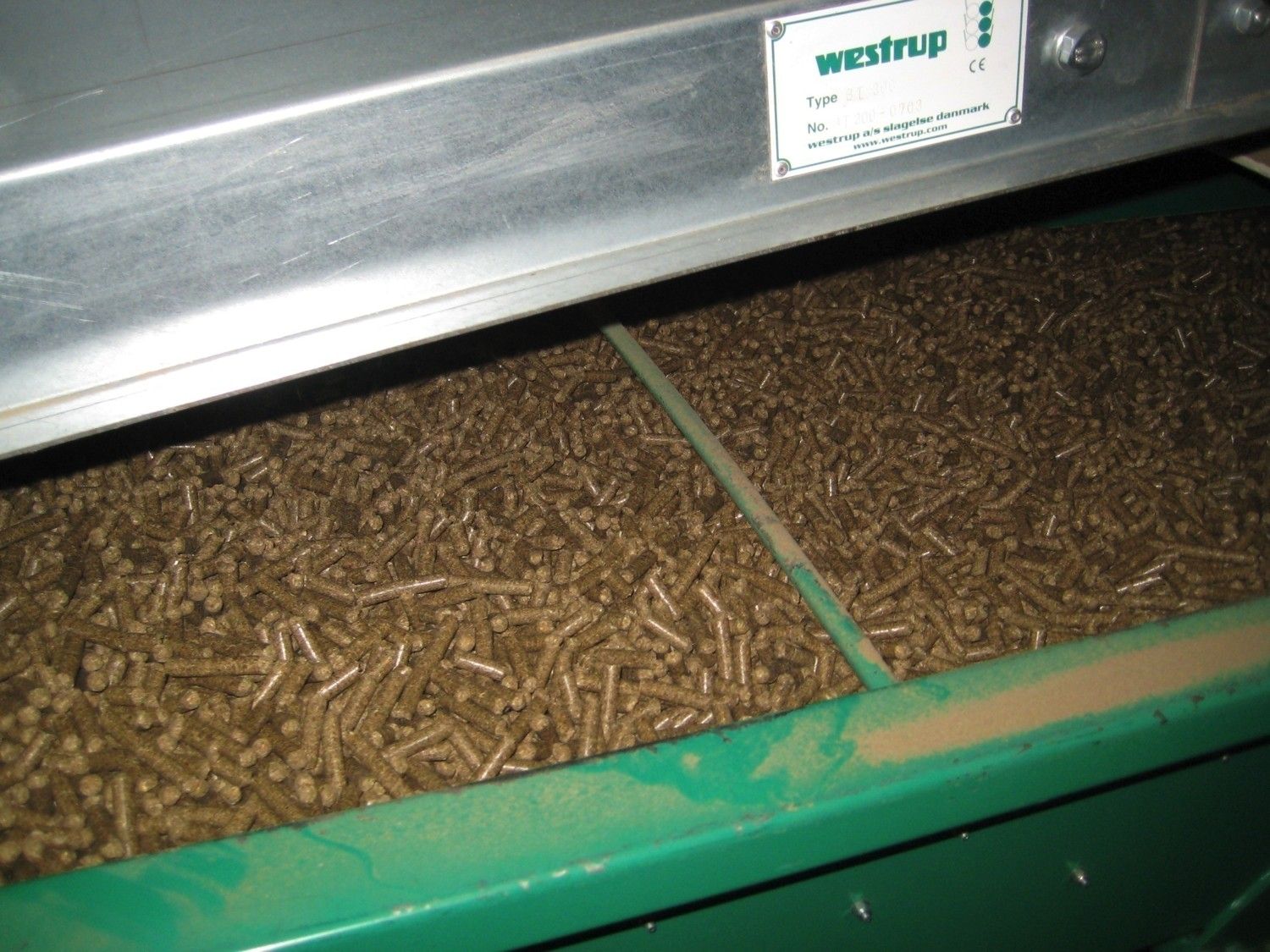
Residues become pellets
When Skånefrö cleans its seed, the screenings are left over. They are pressed into pellets, so the feedstock is uniform and traceable to its source.
- In
- Seed screenings
- Out
- Pellets
Pyrolysis locks it in
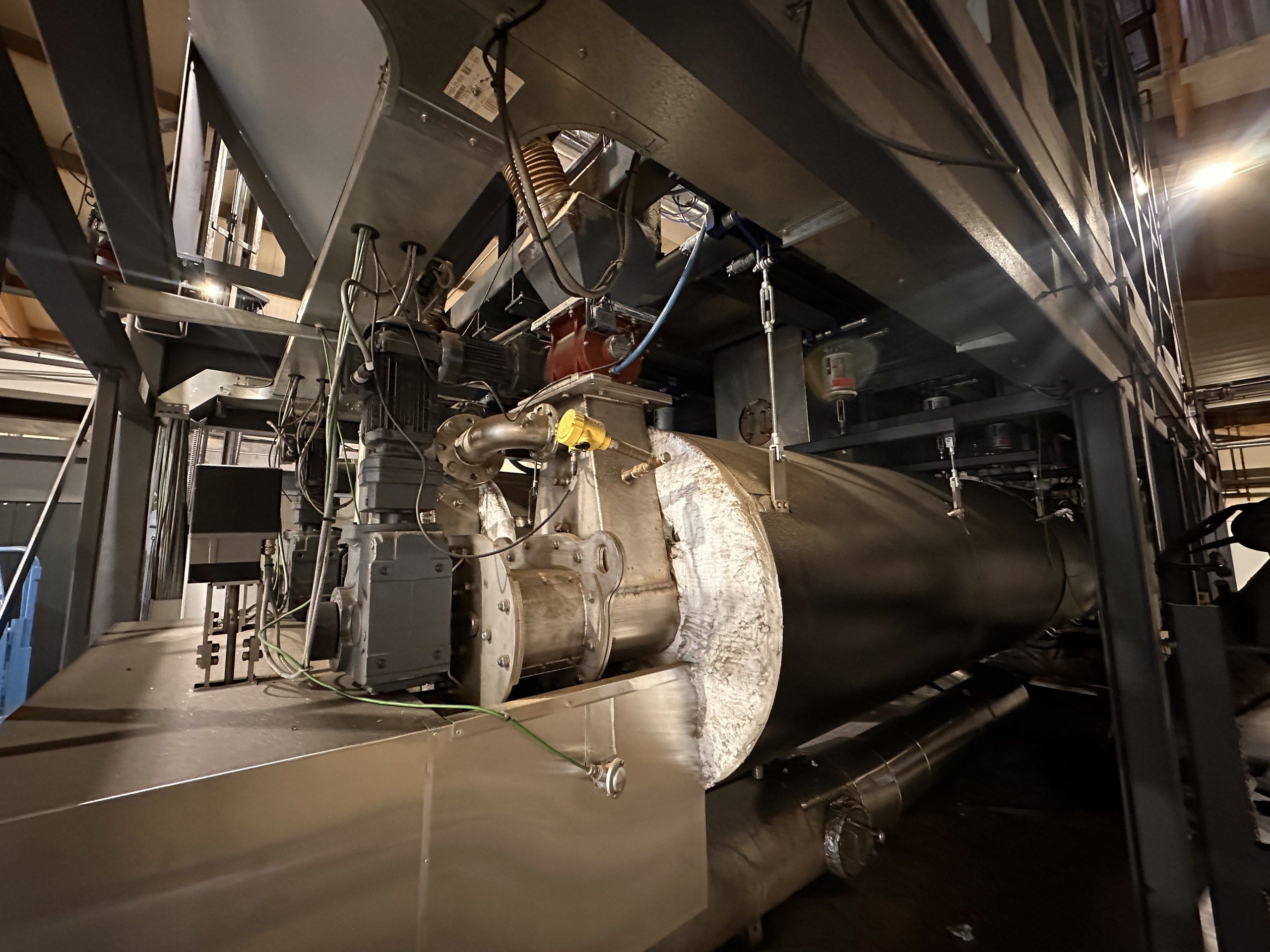
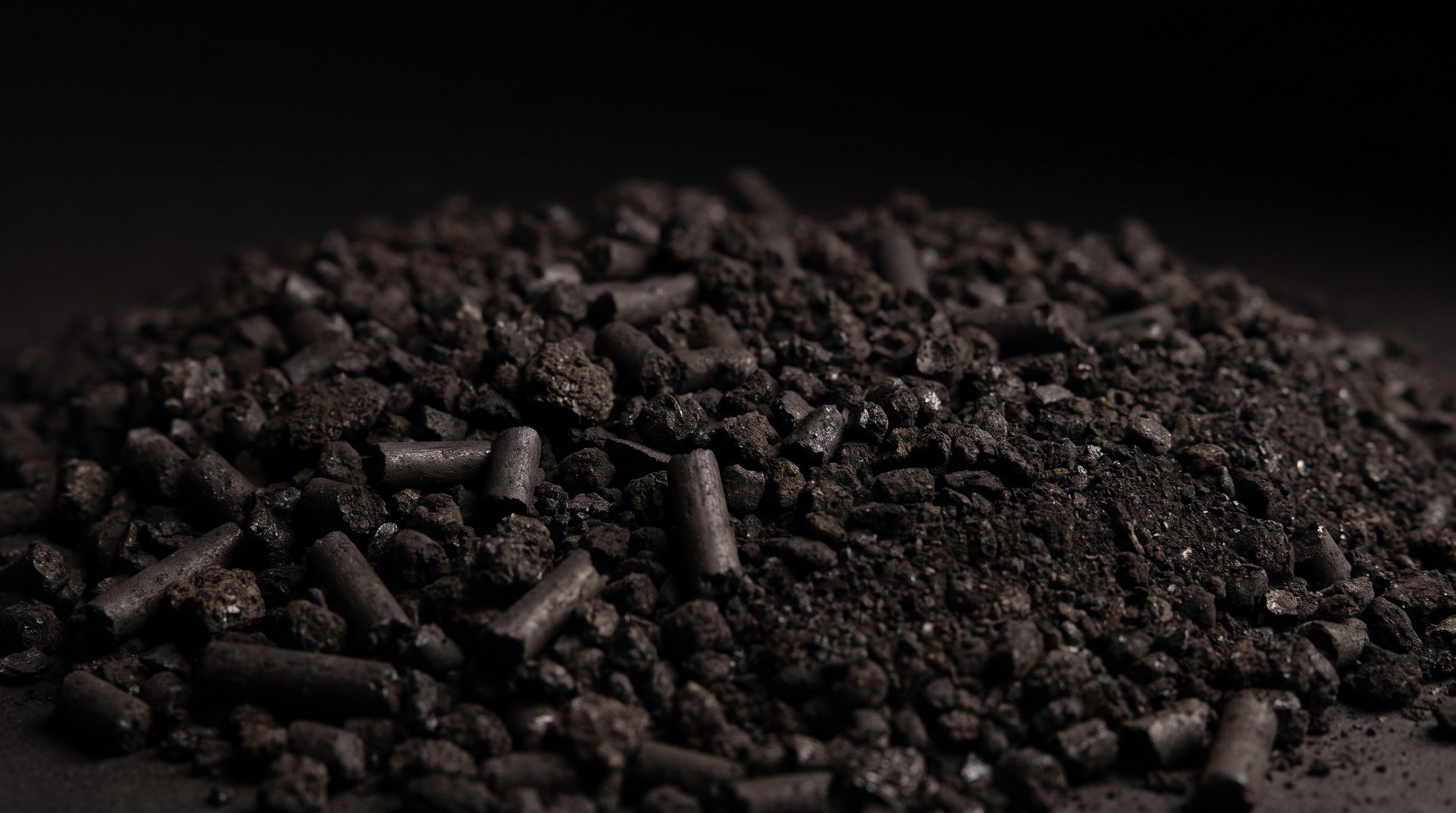
Heated to about 500 °C with almost no oxygen for about 100 minutes, the pellets become biochar: a stable, carbon-rich solid. The process gas is burned, and part of its heat goes into the local district heating network.
- In
- Pellets
- Out
- Biochar + district heat
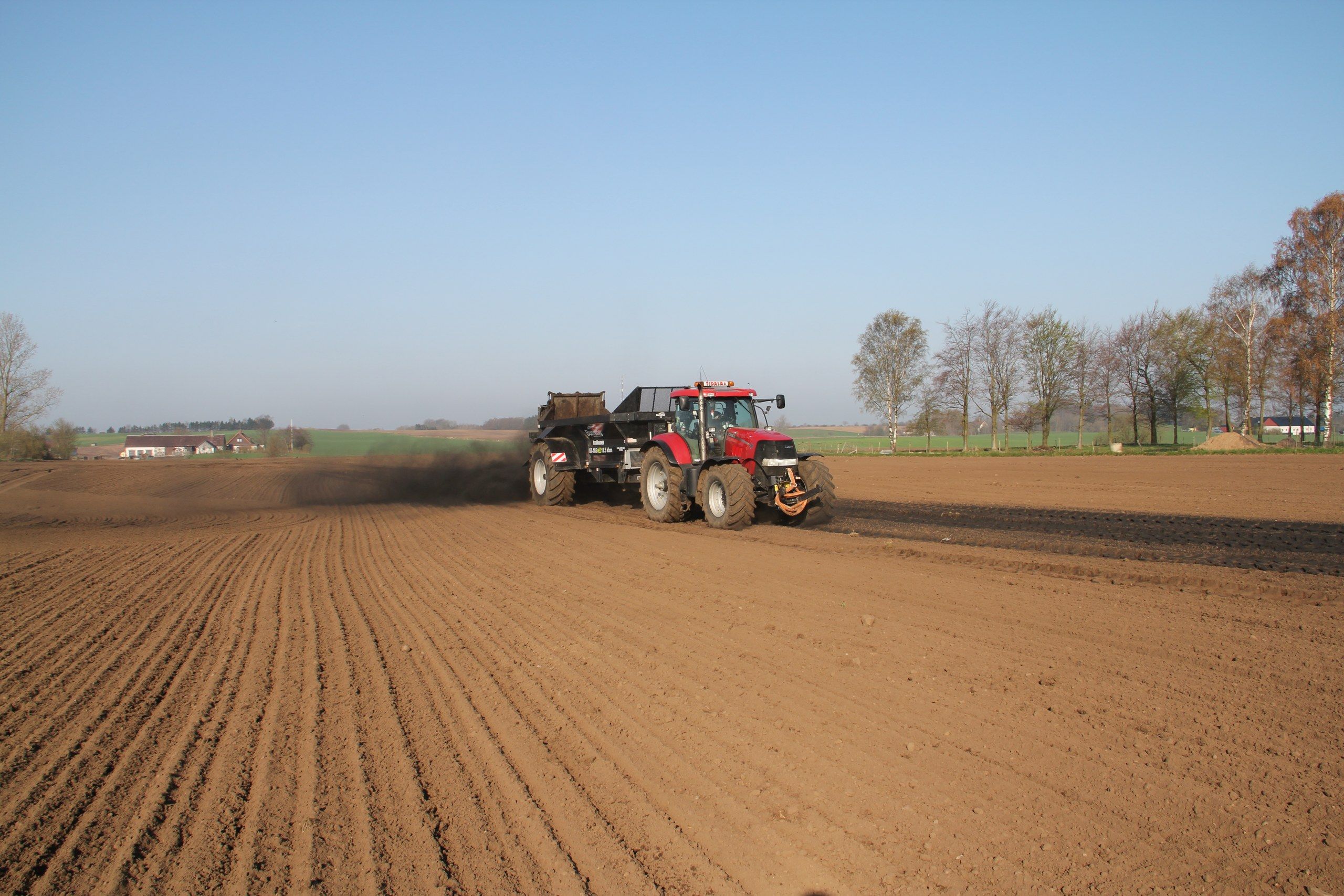
Soil keeps it
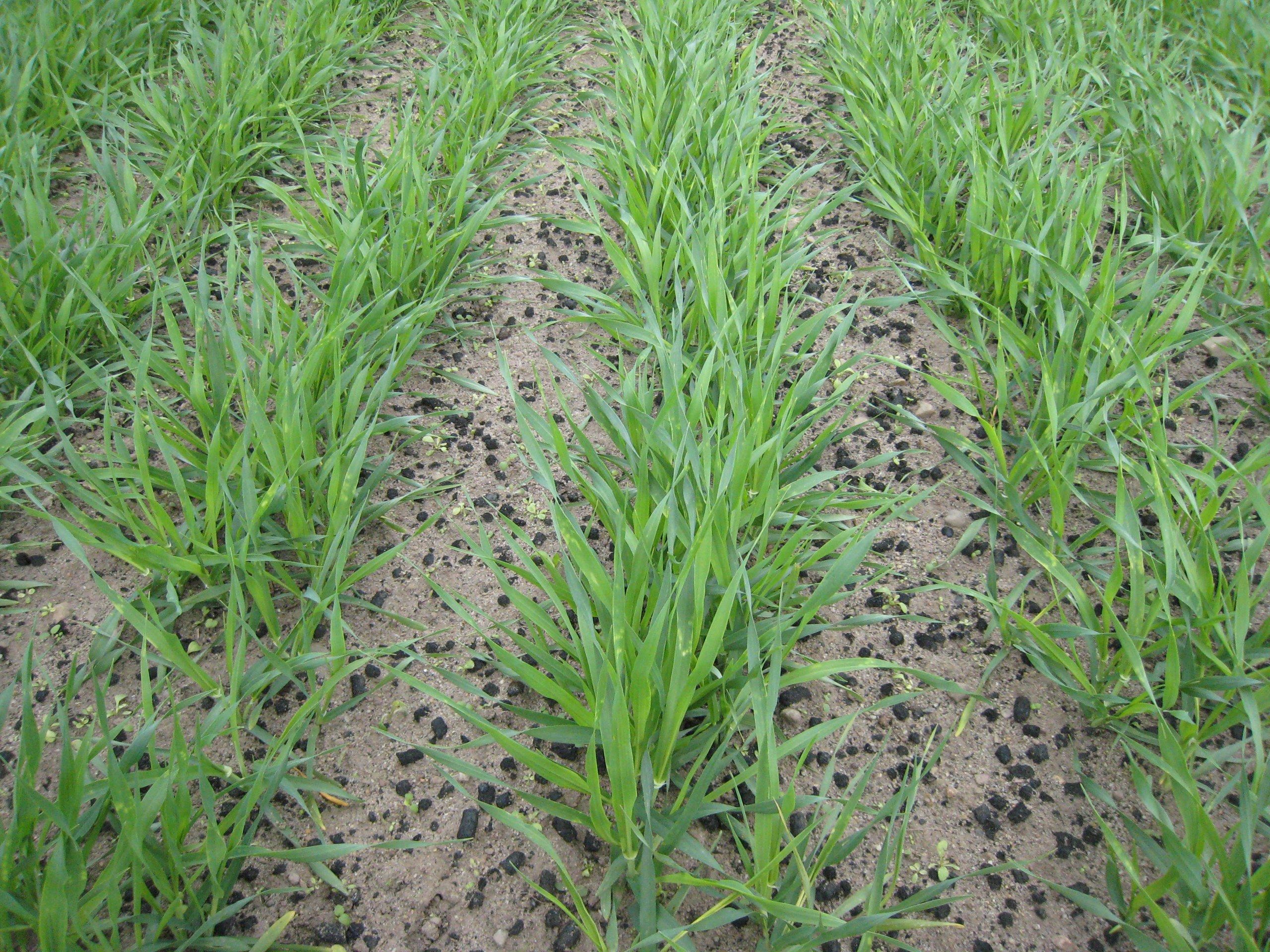
The biochar goes into soil: farmland, green spaces, football pitches and building foundations. The carbon stays there, and in farmland the biochar can help soil hold water and nutrients.
- In
- Biochar
- Out
- Carbon stored in soil
Film · about 4 minutes
The carbon that stays
What happens to harvest residues when they are pelletised and burned, what happens when they become biochar instead, and how long that carbon stays put. Based on the work of Sanei and colleagues.
Sources: Sanei et al. (2024), International Journal of Coal Geology 281, 104409; Sanei et al. (2026), International Journal of Coal Geology 324, 105075; EBI / Biochar Europe (2023). Persistence figures are modelled estimates. ECOERA’s own biochar has not yet been measured for inertinite content; that measurement is planned. Narration, music and some imagery are AI-generated.
Read the transcript
Every summer, across the fields of southern Sweden, a quiet miracle takes place. Leaf by leaf, plants draw carbon dioxide out of the sky, and build themselves from it.
But a harvest leaves more than grain. When the seed is cleaned, screenings are left over. Here, they would otherwise be pressed into pellets and burned in a furnace for heat, and the carbon they hold would go straight back into the air.
And yet, deep in the Earth’s crust, there is proof that carbon can endure. In ancient coal seams, geologists find the charred remains of forests that burned hundreds of millions of years ago. They class this material as inertinite: the most stable of the organic materials in the Earth’s crust.
A pyrolysis reactor does what those ancient fires did, but under control, and in under two hours. Instead of being burned, the pellets are heated to more than 500 degrees, starved of oxygen. Their fragile molecules shed most of their hydrogen and oxygen, and the carbon that remains fuses into dense sheets of interlocking rings. This is biochar.
But how can we know the transformation is complete? Hamed Sanei and his colleagues, at Aarhus University and the Geological Survey of Denmark and Greenland, borrowed a test from coal geology. Shine light on a polished grain, and measure how much is reflected. The more ordered the carbon, the more brightly it shines. Above two per cent, biochar has crossed what they call the inertinite benchmark. Of the commercial biochars they examined, three quarters lay entirely above it.
And how long will such carbon last? In 2026, Sanei and colleagues brought two kinds of evidence together: decay measured in living soil, and oxidation driven hard in the laboratory. On their most cautious reckoning, raw wood loses half its carbon within about two years. An inertinite-rich biochar made from wood would take more than one hundred thousand. After a thousand years, their model leaves 99 per cent of its carbon in place. Not every biochar is equal. Less carbonised material kept about three quarters, which is why biochar has to be measured, not assumed.
And ECOERA’s own biochar? Its inertinite content has not yet been measured; that is planned. But its production parameters point clearly to inertinite. It is made at more than 500 degrees, in PYREG reactors: machinery of the kind that produces inertinite-rich biochar. And its ratio of hydrogen to carbon measured 0.18 and 0.31 in its two most recent batches, well below the limit of 0.7.
Returned to the soil, it settles among roots and microbes, where it can help to hold water and nutrients, while the seasons turn above it. Carbon that was in the air a single summer ago, now held in a form that is built to last. Carbon removed, for good.
02 / Permanence
Why the carbon stays where we put it
- Rainbow verification, 2024–25
A ratio you can measure
The lower the ratio of hydrogen to organic carbon, the more the carbon has fused into stable aromatic structures. Our biochar measured 0.186 and 0.195 in the 2024 and 2025 production batches. The limit for certified biochar is 0.7.
- Ref. 1
The inertinite benchmark
In a peer-reviewed study, Sanei and colleagues proposed a benchmark: biochar whose random reflectance is above 2% counts as inertinite, the most stable maceral in the Earth’s crust. Of the 64 commercial biochars they examined, 76% lay entirely above it. Our own biochar has not yet been measured against this benchmark; that measurement is planned.
Read about the study - Ref. 2
99% left after a thousand years
In 2026 the same group linked decay measured in soil with oxidation measured in the laboratory. Their conservative, lower-bound model gives an inertinite-rich biochar a half-life of about 125,000 years, with 99% of its carbon remaining after 1,000 years. Less carbonised biochars kept 76 to 78%.
Read the paper (open access) - Ref. 3
Evidence from old soils
Charcoal from ancient fires shows how long this carbon can last in soil. Natural charcoal deposits have been dated to about 6,000 years in Amazonia, 9,500 years in Guyana and 23,000 years in Costa Rica.
- Ref. 4
Good company for soil life
Biochar can conduct electrons. Research in Nature Communications (Sun et al., 2017) found that the carbon matrix of chars made at around 700 °C and above can pass electrons directly, and called it a “geoconductor”.
References
- Sanei et al. (2024). Assessing biochar’s permanence: An inertinite benchmark. International Journal of Coal Geology 281, 104409.
- Sanei et al. (2026). A unified framework for biochar carbon permanence. International Journal of Coal Geology 324, 105075.
- Soubiès (1980); Hammond et al. (2007); Titiz & Sanford (2007). Dated charcoal deposits in Amazonia, Guyana and Costa Rica.
- Sun et al. (2017). Rapid electron transfer by the carbon matrix in natural pyrogenic carbon. Nature Communications 8, 14873.
03 / Verification
Checked by people who are not us
A removal is only worth buying if someone independent has checked it. These are the checks behind every tonne.
- Carbon stability
- H/Corg ratios of 0.186 and 0.195 in the 2024 and 2025 batches, against a limit of 0.7, as confirmed by the Rainbow Standard’s verifier from analyses by Eurofins, an independent lab.
- Carbon removal
- Certified under the Rainbow Standard as project RIV-2025-PROJ-118, at the 100-year permanence tier.Open the registry entry
- Contaminants
- Each production batch credited under the Rainbow Standard has been analysed by Eurofins for heavy metals and other contaminants and was within the Rainbow methodology’s limits.
- Production
- Pelletised seed-screening residues, pyrolysed at about 500 °C for about 100 minutes.
Measured values against their limits
Molar ratio of hydrogen to organic carbon. Lower means more stable carbon; the limit for certified biochar is 0.7. The 2024 batch measured 0.186.
SourcesRainbow verification, based on Eurofins batch analyses
04 / Production
Made in Hammenhög, southern Sweden
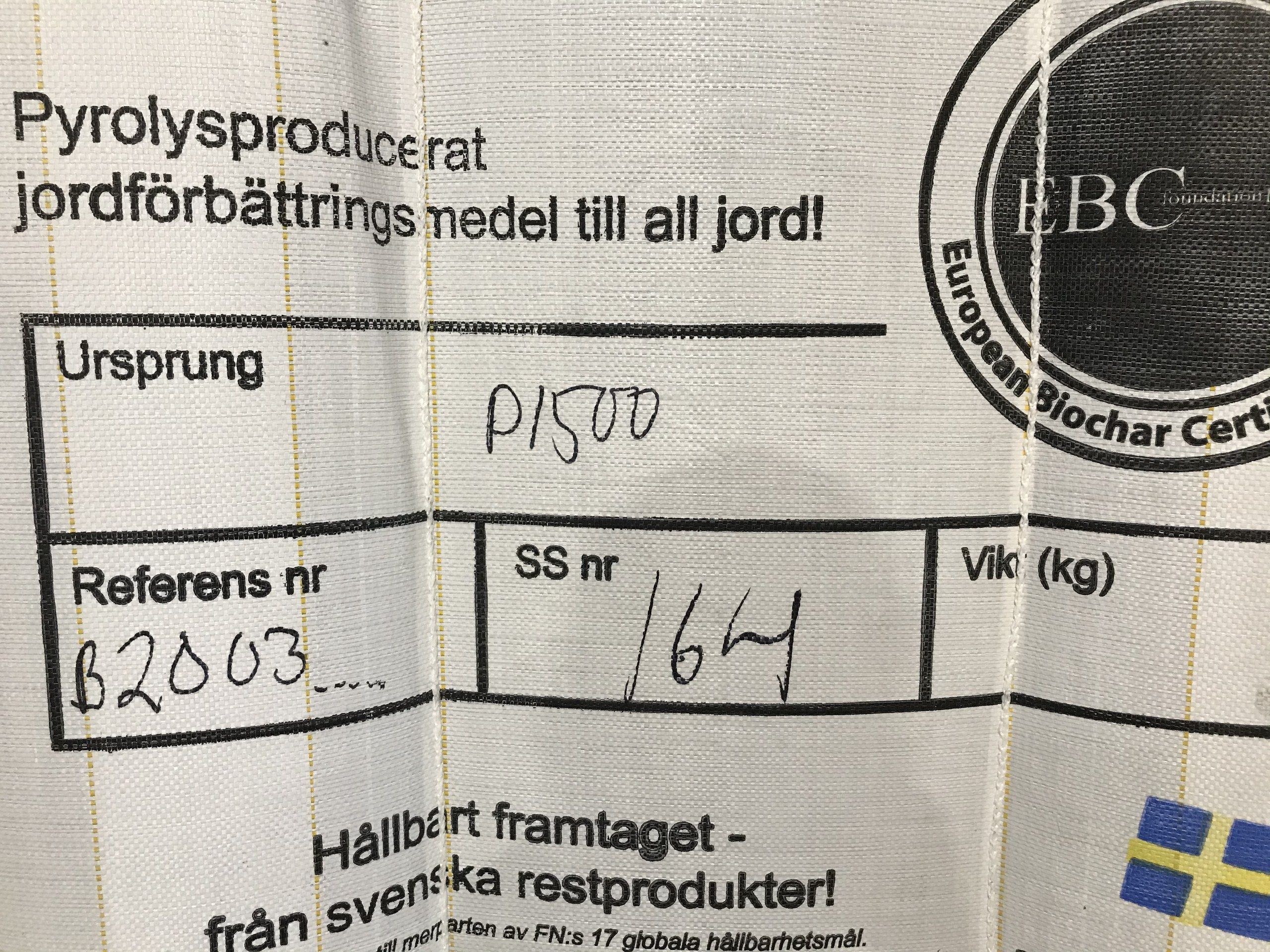
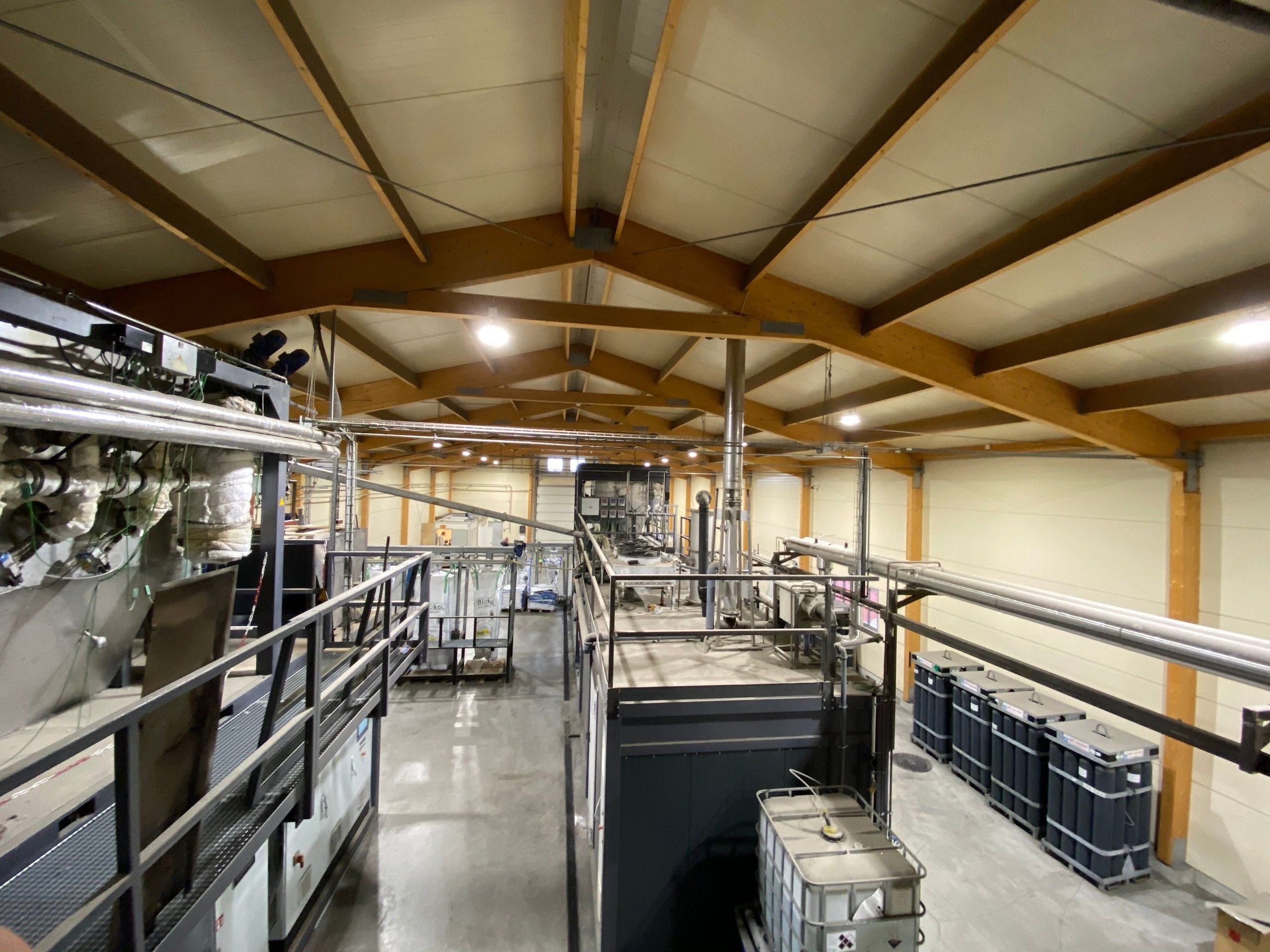
ECOERA Millennium 1 was built in 2018. It has two PYREG reactors, a P500 and a P1500, and part of the heat from the process goes into district heating.
Put carbon back in the ground.
Tell us how many tonnes you need and when. We reply with availability, price and the verification documents.